Supporting young women and men trade union leaders amid wage disputes in Bangladesh’s garment sector
November 20, 2026GoodWeave stands in solidarity with workers and trade union leaders in Bangladesh as they call for fair wages, better working conditions and respect for their rights amid ongoing protests and minimum wage negotiations in the country’s ready-made garment sector.
Rising living costs have fueled demands for higher wages, with trade union representatives proposing a monthly minimum wage of BDT 32,000 (approximately $240 USD), compared with the current minimum of BDT 12,500 (approximately $100 USD)1. The postponement of a Minimum Wage Board meeting on November 16 and reports of arrests of trade union leaders have added to concerns about workers’ rights and the ongoing unrest2.
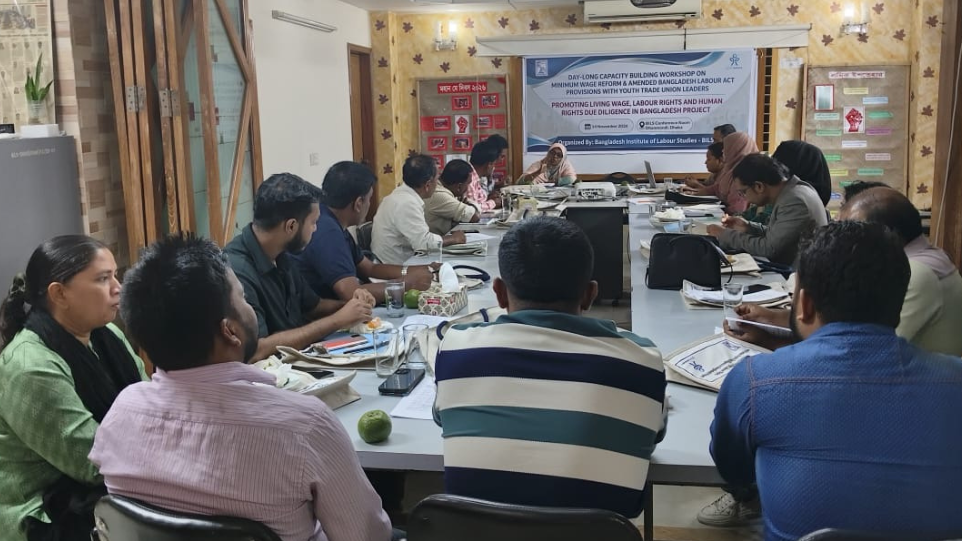
These developments underscore the importance of informed trade union leadership and workers’ participation in decisions affecting their livelihoods. On November 14, the Bangladesh Institute of Labour Studies (BILS), with support from GoodWeave, conducted a day-long capacity-building workshop in Dhaka for 19 young trade union leaders, seven of whom were women. The training focused on minimum wage reforms and recent amendments to the Bangladesh Labour Act.
Sessions covered Bangladesh’s minimum wage-setting process, the cost of living, workers’ entitlements and wage system reforms. Discussions also examined challenges in the current wage-setting system, including transparency, worker representation and the use of reliable data to determine fair wages.
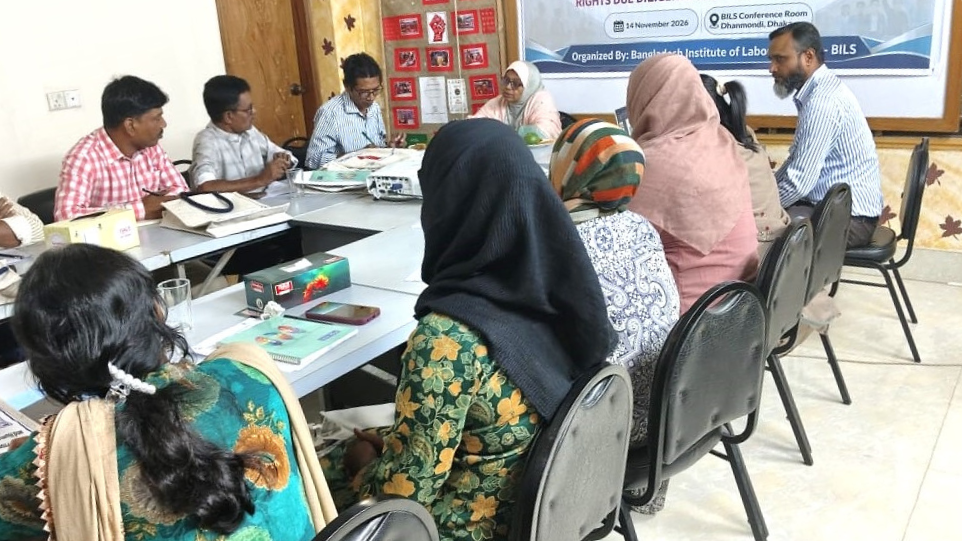
Professor Mostafiz Ahmed of Jagannath University facilitated sessions on wages, living costs and workers’ rights. Md. Masum Billah, a law officer with the Department of Inspection for Factories and Establishments, led sessions on recent labor law amendments, decent work, social protection and workers’ access to justice. Anwar Hossain, vice chairman of BILS and a permanent workers’ representative on Bangladesh’s Minimum Wage Board, chaired the workshop.
The workshop is part of “Promoting Living Wage, Labour Rights and Human Rights Due Diligence in Bangladesh”, a broader initiative implemented by BILS with GoodWeave’s support. The project focuses on minimum wage reforms, labor rights protections and evidence-based advocacy, including greater participation by young and women trade union leaders in discussions affecting workers’ rights and livelihoods.
With minimum wage negotiations underway and recent changes to Bangladesh’s labor laws, informed trade union leadership is critical to ensuring workers’ interests are represented. Through this partnership, GoodWeave and BILS are helping young women and men union leaders navigate wage-setting processes, understand labor laws, and advocate for fair wages and better working conditions for the workers they represent.
GoodWeave in addition to the Fair Labor Association (FLA), American Apparel & Footwear Association (AAFA)3, and the Ethical Trading Initiative (ETI)4, has called for fair wage negotiations and protections for workers exercising their rights, including the release of detained trade union representatives. The International Labor Organization (ILO)5 has emphasized the need for transparent, evidence-based wage-setting, freedom of association and peaceful dialogue.
GoodWeave’s work in Bangladesh also includes providing skills training to help adolescents prepare for employment. This week, a closing event highlighted outcomes from the initiative, including young people securing jobs. The event drew more than 80 attendees, with representatives from GIZ and the International Labor Organization (ILO) among those present.
1 Reuters, Bangladesh sets up wage board as garment workers’ unrest shuts factories
2 Dhaka Tribune, RMG unrest escalates, 300 arrested as clashes spread
3 Fair Labor, FLA and AAFA call for release of union representatives detained in Bangladesh
4 Ethical Trading Initiative, Joint Statement on the 2026 Minimum Wage Review for Bangladesh’s Ready-Made Garment Sector
5 International Labor Association, Statement on the minimum wage review and unrest in Bangladesh’s ready-made garment sector